
انواع ممبرانهای مصنوعی و ممبرانهای بیولوژیکی
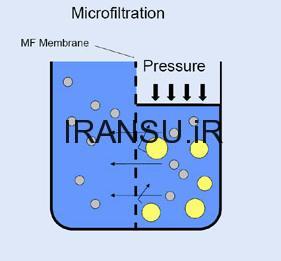
میکروفیلتراسیون (MF)
در فرآیند میکروفیلتراسیون ذرات بزرگتر از 0.08 تا 2 µm حذف میشوند و فشار عملیاتی در محدودهی 7 تا 100 کیلو پاسکال میباشد. از فرآیند میکروفیلتراسیون برای حذف مواد جامد معلق باقیمانده (SS) ، حذف باکتریها بهمنظور ضد عفونی کردن مؤثر آب و نیز بهعنوان یک پیش تصفیه برای فرآیند اسمز معکوس استفاده میشود. بیو راکتور غشایی (MBR) فنآوری نسبتاً جدیدی است که در آن میکروفیلتراسیون و بیوراکتور جهت انجام تصفیهی بیولوژیکی با هم ترکیب شدهاند.

اولترافیلتراسیون (UF)
در فرآیند اولترافیلتراسیون ذرات بزرگتر از 0.005 تا 2 µm حذف میشوند و فشار عملیاتی در محدودهی 70 تا 700 کیلو پاسکال میباشد. از فرآیند اولترافیلتراسیون برای بسیاری از کاربردهای مشابه با میکروفیلتراسیون استفاده میشود. برخی از غشاءهای اولترافیلتراسیون نیز برای حذف ترکیبات محلول با وزن مولکولی بالا، مانند پروتئینها و کربوهیدراتها مورد استفاده قرار میگیرند. علاوهبر این، آنها قادر به حذف ویروسها و برخی از اندوتوکسینها (ترکیبات سمی) میباشند.
نانوفیلتراسیون (NF)
نانوفیلتراسیون که RO “بیقاعده (loose)” نیز نامیده میشود، میتواند ذرات کوچکتر از 0.001 µm را دفع نماید. از فرآیند نانوفیلتراسیون برای حذف ترکیبات محلول انتخاب شدهای در فاضلاب استفاده میشود. NF در درجه اول یک فرآیند سختیگیری با استفاده از غشاء است که بهعنوان جایگزین برای سختیگیرهای شیمیایی پیشنهاد میشود.
همچنین، نانوفیلتراسیون میتواند بهعنوان یک پیشتصفیه قبل از اسمز معکوس استفاده شود. اهداف اصلی جهت استفاده از NF در مرحلهی پیشتصفیه عبارتند از: (1) بهحداقل رساندن لایگرفتگی ناشی از ذرات و میکروبها در ممبرانهای RO توسط برطرف نمودن کدورت و باکتریها، (2) جلوگیری از ایجاد رسوب توسط حذف یونهای سختی، (3) کاهش فشار عملیاتی در فرآیند RO با کاهش غلظت کل جامدات محلول (TDS ) در آب خوراک.
اسمز معکوس (RO)
معمولاً از اسمز معکوس برای فرآیند نمکزدایی استفاده میشود. علاوهبر این، استفاده از RO جهت حذف ترکیبات محلول باقیمانده در فاضلاب، پس از انجام تصفیه پیشرفته با میکروفیلتراسیون متداول میباشد. فرآیند RO مانع از عبور یونها میشود اما برای تولید آب بدون یون به فشار زیادی احتیاج دارد (850 تا 7000 کیلو پاسکال).
Types of artificial membranes and biological membranes
Microfiltration (MF)
2 μm microfiltration process to remove particles greater than 0.08, and the operating pressure is in the range of 7 to 100 kPa. The microfiltration process to remove residual suspended solids (SS), effective water disinfectant to eliminate bacteria and is used as a pretreatment for reverse osmosis process. Membrane Bio-Reactor (MBR) technology that is relatively new and microfiltration bioreactor for biological treatment are combined.
Ultrafiltration (UF)
The ultrafiltration process removes particles larger than 0.005 to 2 μm, and the operating pressure is in the range of 70 to 700 kPa. The process is similar to microfiltration, ultrafiltration is used for many applications. Some of ultrafiltration membranes for removal of soluble high molecular weight compounds, such as proteins and carbohydrates are used. In addition, they were able to remove viruses and some endotoxins (toxic substances) respectively.
Nanofiltration (NF)
Nanofiltration the RO “irregular (loose)” is also called, can repel the particles smaller than 0.001 μm. The nanofiltration process for the removal of soluble compounds in wastewater is carefully selected. NF is primarily a process using membranes Skhtygyry is recommended as an alternative to chemical Skhtygyrhay.
Also, reverse osmosis, nanofiltration can be used as a Pyshtsfyh before. The main objectives for the use of NF in Pyshtsfyh stage are: (1) minimum delivery Laygrftgy particles and microbes from the RO membranes by removing turbidity and bacteria, (2) to prevent the fouling by the removal of hardness ions, (3) reducing the pressure operating the RO process by reducing the concentration of total dissolved solids (TDS) in drinking water.
Reverse osmosis (RO)
Usually the reverse osmosis desalination process used. In addition, the use of RO to remove dissolved compounds in wastewater after treatment is common with advanced microfiltration. RO process for producing non-ion prevents the passage of ions but needs a lot of pressure (850 to 7000 kPa).
Avltrafyltrasyvn, Mkvs, osmosis membranes bio-reactors Ghshayy, Baktryha, removal process Avltrafyltrasyvn, Skhtygyry, Mykrvfyltrasyvn, the membranes RO, nanofiltration membranes Byvlvzhyky, membranes Msnvy, Mykrvfyltrasyvn
